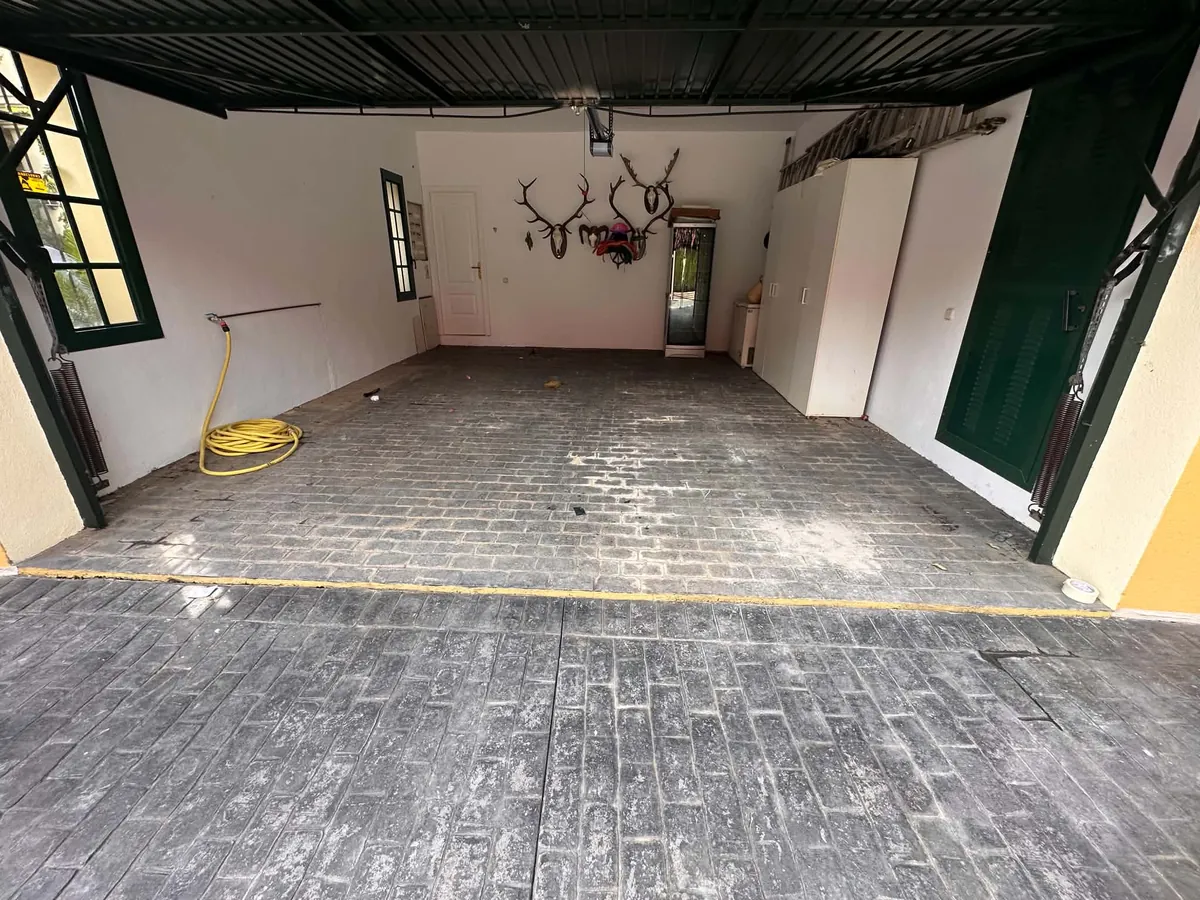
Why Paint Peels from Driveways and Patios, and How to Stop It Happening Again
Paint peels from a driveway or patio when the bond between the coating and the concrete fails, and that almost always traces back to what was under the paint or the conditions when it went on, not to bad luck. The usual culprits are dirt or old sealer left on the surface, moisture in the slab, a product not made for exterior floors, poor weather timing or a slab that moves.
Send us a photo and the m²What does peeling actually tell you?
Peeling tells you the coating was never properly attached to sound concrete, or that something has since forced it off. Look at the back of a loose flake: if it carries dust, a white chalky layer or old sealer, the bond was to that layer rather than to the slab.
The pattern matters too. Peeling in tyre tracks points to traffic or curing issues; peeling in patches near walls or planters suggests moisture; peeling everywhere at once usually means preparation or product choice went wrong.
Before anything is repainted, it is worth taking a few close-up photos of the worst areas and of a loose flake turned over. Those pictures usually narrow the cause down quickly, and they save paying for a second coating that fails in exactly the same way as the first.
Was the surface prepared properly?
Poor preparation is the most common reason. Paint applied over dust, algae, oil, loose particles or a weak surface skin bonds to the contamination, and when that contamination lets go, so does the paint.
A proper job removes all of that first, repairs the defects and lets the slab dry. Our guide on preparing concrete before painting explains what each stage involves and why skipping one is costly later.
Could old sealer be the problem?
On imprinted concrete, very often yes. Many imprinted driveways and patios were sealed when new and resealed since, and those old layers can lose adhesion, turn white or cloudy and start to flake.
If a new coat is applied over a sealer that is already failing, the two layers come away together. Sound, well-bonded old coatings can sometimes stay, but only if the new product is compatible with them according to its data sheet.
Is moisture coming through the slab?
Moisture is a frequent cause of blistering and peeling, especially on surfaces that touch soil at their edges or sit at the bottom of a slope. Water moving up through the concrete can build up under a film-forming coating and push it off from below.
Signs to look for are bubbles in the paint, peeling concentrated near planters, lawns or the foot of walls, and white salt deposits on bare patches. Painting over persistent damp does not cure it; the source has to be understood first, and that is an assessment to make before choosing any coating.
Was the right product used?
A surprising number of peeling driveways were painted with a product never designed for floors, or not designed for outdoor sun. Wall and masonry paints, and some interior floor coatings, cannot cope with tyres, foot traffic and strong ultraviolet light.
The data sheet states whether a coating is for exterior floors and for vehicle traffic. That is why we choose coatings by their sheet for each job; our page on coloured resin coating and the guide to paint systems explain the reasoning.
If you inherited a painted drive when buying the villa, you may not know what was used. In that case the condition of the coating and a simple adhesion check on site tell more than any guess about the original tin.
Did the weather or timing work against the paint?
Application conditions are part of the product specification. Painting in very hot sun, onto a slab that is still damp from washing, before rain or late in the day when dew forms can all weaken the bond or the film.
Traffic timing matters just as much. Driving onto a coating before it has cured as the data sheet requires can lift it in the tyre tracks, especially when the tyres are hot. A careful contractor plans around both and is willing to move a date rather than force it.
Could the concrete itself be moving?
If the peeling follows cracks, or the cracks under the paint keep reopening, the slab may be moving. No coating can stay intact over a crack that opens and closes with the ground.
Moving slabs and active cracks need assessing by a specialist before any recolouring. Our sister site on crack repair explains the difference between surface cracks and those that signal movement.
How is a peeling driveway put right?
By removing what has failed, fixing the cause and only then recoating. Loose and flaking paint is taken off, the surface is cleaned and repaired, any moisture or movement issue is addressed, and a compatible coating goes on in two coats under the right conditions.
- Identify the cause from the pattern and the back of the flakes.
- Remove all loose and poorly bonded coating.
- Clean, repair cracks and edges, and let the slab dry.
- Apply a suitable exterior floor coating in two coats, following its data sheet.
This is the same sequence we follow on every job; see concrete painting and concrete sealing for how it applies to your surface.
Frequently asked questions
Can I just paint over the peeling areas?
Not successfully. New paint over peeling paint bonds to a layer that is already letting go, so it will peel with it. The loose material must be removed, the cause identified and the surface prepared properly before any new coating is applied.
Why is my paint peeling only in the tyre tracks?
Peeling in tyre tracks usually points to traffic stress before the coating had fully cured, hot tyres on a soft film, or a product not rated for vehicles. The data sheet states curing times and whether the coating is designed for vehicle traffic.
Why is the paint bubbling?
Bubbles or blisters often mean moisture or vapour trapped under the coating, either because the slab was damp when painted or because water rises through it. Painting in strong heat can also cause surface defects. The cause needs identifying before repainting.
My imprinted concrete has white patches under the sealer. Is that related?
Whitening under a clear sealer is commonly linked to moisture or a sealer that has broken down. A coating applied over it will not hold well. Those areas generally need the failing sealer removed before recolouring, as our guides on preparation explain.
Does peeling mean the concrete is bad?
Not necessarily. Most peeling comes from the bond between paint and surface rather than from the concrete itself. If the slab is firm and the cracks are stable, it can usually be cleaned, repaired and recoated successfully. A photo of the cracks helps confirm this.
Can sun alone make paint peel?
Strong sun alone rarely causes peeling on a correctly chosen exterior coating, though it can fade or chalk an unsuitable product. Sun combined with a weak bond, moisture or the wrong paint makes failures show sooner. Choosing a coating rated for exterior use avoids most of this.
Was it a mistake to paint the driveway at all?
Usually the problem is how it was painted rather than the decision to paint. With proper preparation, a suitable product and the right conditions, a painted driveway can perform as its data sheet describes. Our article on what can go wrong covers the main risks.
How do you remove old peeling paint?
Loose paint is removed mechanically and by washing, and anything still poorly bonded is taken off until only sound material remains. The method depends on the coating and surface. Our sister site on cleaning covers paint stripping in more detail.
Will a primer stop it happening again?
A primer helps where the system requires one, but it cannot solve contamination, moisture or movement. It is one part of a correct build-up, not a fix for a poorly prepared or damp slab. Preparation and the right product still decide the result.
Can you assess my peeling driveway from photos?
Photos are a good start. Send a wide shot, close-ups of the peeling areas, the back of a loose flake if possible, and any cracks or damp patches. From those we can usually tell you the likely cause and whether recoating makes sense.